- Location : Home» Newsroom
GABA plays a crucial role in plant tissue-specific adaptation to Cd2+ toxicity through metabolomic analysis in cotton
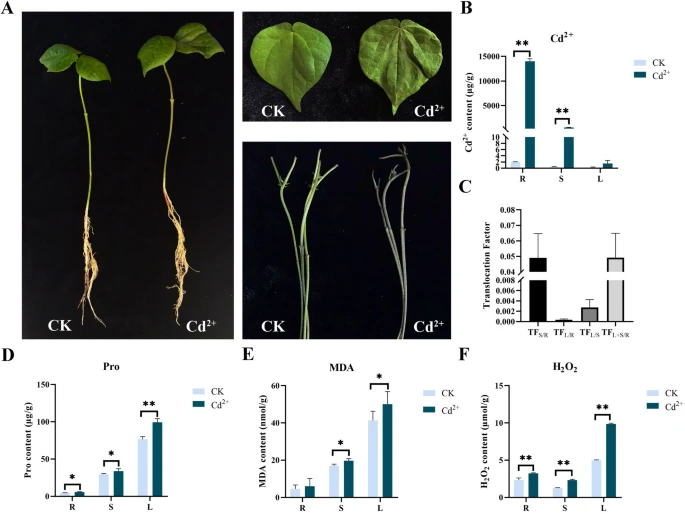
Cadmium (Cd2+) contamination threatens plant viability and human health by disrupting cellular homeostasis and metabolic processes. Investigating the molecular mechanism underlying Cd2+ tolerance in plants is necessary to remediate Cd2+-contaminated soil. This study presents an integrated physiological, metabolomic, and transcriptomic analysis of the roots, stems, and leaves in response to Cd2+ stress. The study found that Cd2+ accumulation was significantly lower in Cd2+-tolerant cotton. Under 4 mM Cd2+ stress, the Cd2+ content in cotton increased significantly, accompanied by elevated levels of malondialdehyde (MDA), proline (Pro), and hydrogen peroxide (H2O2), as well as noticeable damage to the cellular ultrastructure. Metabolomic profiling analysis revealed that Cd2+ stress significantly affected the distribution of lipids, amino acids, and organic acids in different tissues. The metabolic pathways of alanine, aspartate, and glutamate are closely associated with Cd2+ stress, and the induced elevation of GABA levels plays a crucial role in cotton’s adaptation to Cd2+ stress. Exogenous GABA application significantly enhances Cd2+ tolerance in cotton by reducing Cd2+ accumulation and decreasing the content of Pro, MDA, and H2O2. Silencing of the γ-aminobutyric acid (GABA) biosynthetic gene glutamate decarboxylase (GhGAD6) resulted in increased Cd2+ sensitivity, demonstrating that GABA alleviates Cd2+ toxicity in cotton through reducing Cd2+ accumulation and scavenging ROS. These findings elucidate the molecular basis of Cd2+ stress tolerance in plants and provide a key for the effective strategy of enhancing Cd2+ tolerance in cotton.