- Location : Home» Newsroom
Sharpen Competence on Duty, Demonstrate Commitment through Secondment
To advance national strategies including seed industry revitalization, targeted assistance and industrial support for Xinjiang, the Institute of Cotton Research of CAAS (ICR‑CAAS) selects outstanding researchers for secondment to relevant departments of the Ministry of Agriculture and Rural Affairs. Stepping out of laboratories and research institutes, these staff receive ideological, political and practical training on a higher working platform. Taking up varied assignments, some safeguard biosafety for biological breeding, some engage in targeted assistance and Xinjiang-support programs, and others plan cotton industrial development from a holistic perspective. They broaden their vision, strengthen comprehensive capacity, translate field experience into motivation, and deliver professional performance, fully showing the dedication of ICR‑CAAS researchers.
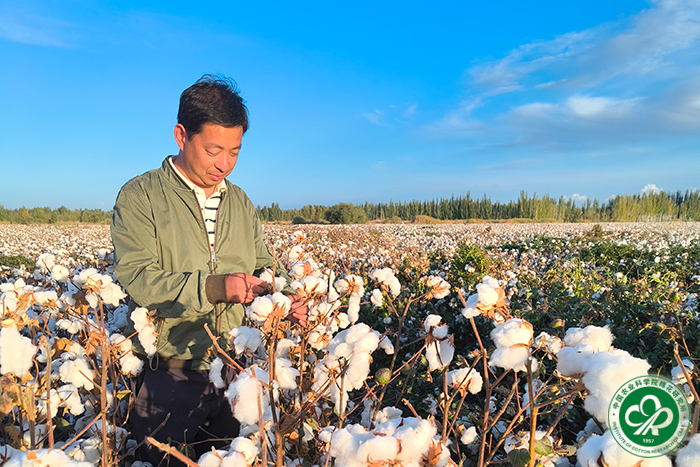
Guarding Biosafety to Support Breeding Industry Development
Zhang Kaixin, Assistant Researcher at ICR‑CAAS, is seconded to the Science and Technology Development Center of MARA, working in the Divisions of GMO Biosafety Testing and GMO Biosafety Assessment. Despite shifting roles, he stays committed to advancing the industrialization of biological breeding. While working on cotton sample testing, data analysis and dossier management, he recognizes the vital role of testing in the safety assessment of Bt cotton. Faced with new challenges brought by emerging biotechnologies, he contributes to improving testing standards to underpin safety evaluation of novel biological products. During his tenure in the assessment division, he understands rigorous review serves to enable sound industrial progress rather than block innovation. He helps research teams standardize applications and solidify transformation studies, accelerating the rollout of promising products for food security. Having witnessed the steady advancement of biological breeding from pilots toward commercialization, he grasps the core mission of GMO regulation: enabling innovation, protecting public safety and guarding national biosecurity. “I will keep delivering solid work, safeguard seed security with professional expertise, strive to be a ‘good seed’ rooted in my post, and contribute to seed industry revitalization and national food security,” he said.
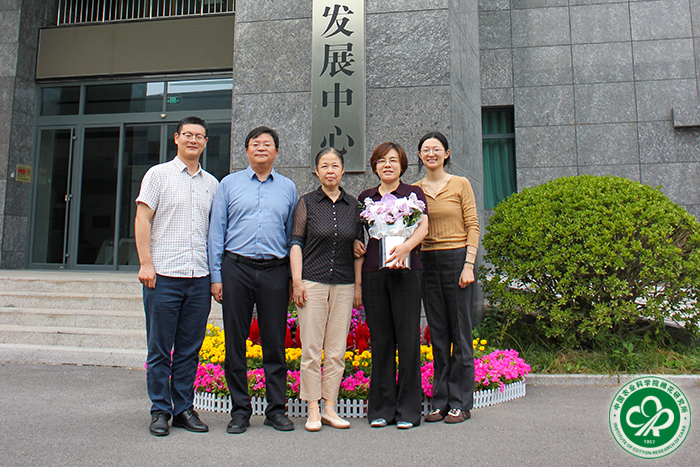
Forging a Pragmatic Work Style, Empowering Targeted Assistance with Youth Energy
Targeted assistance by central institutions and paired support for Xinjiang are major strategic tasks set by the Central Committee. Since September 2026, Associate Researcher Li Xiaofei has been seconded to the Targeted Assistance Division, Department of Regional Cooperation Promotion, MARA. He notes such work is far beyond routine business; it carries political significance for balanced regional development, common prosperity, stability in border areas and ethnic unity. During his secondment, he cultivates a down-to-earth mindset, avoids impetuosity, and learns grassroots realities by updating datasets and verifying local conditions. He gains insights on coordination and accountability through document circulation, work supervision and scheduling, and builds rigorous habits via file management and contract drafting. “I will uphold the vision: I may not claim the credit for success, yet I must shoulder responsibility for its delivery. I will focus on every basic task, fulfill my duties in supporting Xinjiang industries, project implementation and livelihood improvement, and leave a solid and worthwhile mark through tangible outcomes in targeted assistance,” Li Xiaofei stated.
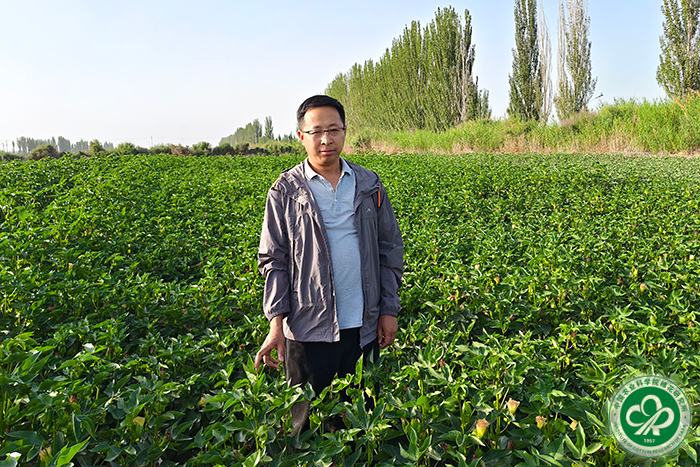
Expanding Strategic Vision, Aligning Research with Industrial Demands
From September 2025 to September 2026, Associate Researcher Cheng Hailiang served on secondment at the Crop Production Management Department, MARA. Moving beyond lab-scale research, he gained an overview of national cotton production. He identified an urgent industry demand for machine-harvestable, stable-yield, high-quality, stress- and disease-resistant cotton varieties, and recognized that deeper integration of basic research and field application is the priority for cotton science. This secondment experience helped him better orient his research. He links cutting-edge genomics and molecular breeding technologies to real bottlenecks in cotton production, ensuring research topics respond to industrial needs and findings translate into practical solutions. “Back at my research post, I will maintain demand-driven research, bridge fundamental studies and field application, pursue in-depth basic research and targeted applied innovation. I aim to generate more results to stabilize cotton yield and quality, protect seed security, and boost high-quality development of the cotton industry,” Cheng Hailiang remarked.