- Location : Home» Newsroom
Serving the National Strategy: CRI Cadres on the Front Line in Xinjiang and Tibet
Grain and cotton security constitutes a matter of national strategic importance bearing on the national economy and people’s livelihood. Pair‑assistance to Xizang and Xinjiang represents a major strategic decision made by the Central Committee from the overall perspective of the cause of the Party and the country, and forms an essential component of the Party’s strategies for governing Xizang and Xinjiang in the new era. In recent years, the Institute of Cotton Research, Chinese Academy of Agricultural Sciences (ICR‑CAAS), has actively selected outstanding young cadres for temporary assignments on the snowy high‑plateau and across the Tianshan Mountains. Rooted in the front‑line of agricultural production in border regions, they uphold their original aspiration of serving agriculture on high‑land barley fields and vast cotton plantations. Leveraging scientific and technological strength, they safeguard food security and reinforce the security barrier for the cotton industry.
Traveling thousands of miles to Xinjiang to guard cotton fields, forging ahead with dedication to fulfill missions
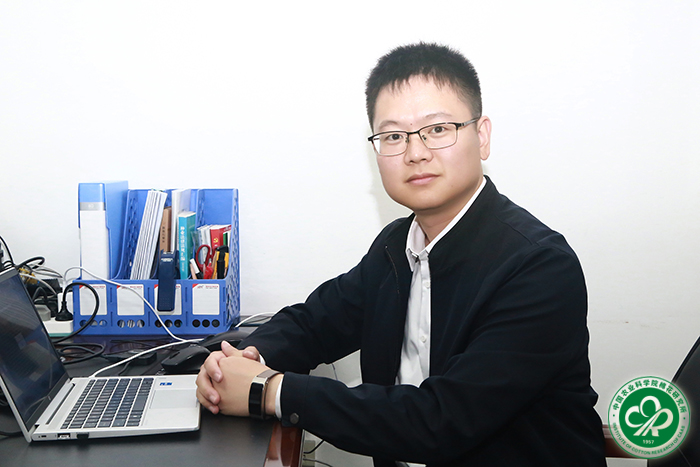
China’s cotton industry hinges on Xinjiang, which accounts for over 90 percent of China’s total cotton output. In 2020, upon the recommendation of the Ministry of Agriculture and Rural Affairs, Researcher Yang Zuoren of ICR‑CAAS went to Xinjiang Academy of Agricultural and Reclamation Science as a member of the 10th group of central‑government‑dispatched cadres to aid Xinjiang. When receiving the appointment notice, his daughter had just turned two‑years‑old, a time when his family badly needed his company. Caught between the tender affection for his family and the industrial call from the borderland, driven by the mission of “serving the nation through science and technology”, Yang Zuoren resolutely set off for Xinjiang.
During his tenure in Xinjiang, he served as Director of the Achievement Transformation Division. Under his promotion, Xinjiang Academy of Agricultural and Reclamation Science became the first public‑service institution of the Xinjiang Production and Construction Corps to implement measures for achievement‑transformation benefit distribution, bridging the “last mile” translating scientific research achievements into real‑world production. He led his team across the expanse of the Tianshan Mountains, visiting farm fields, cotton‑ginning mills and spinning factories to identify genuine demands of farmers and local industries across producing zones. Through science lectures and hands‑on technical training, he fostered a local talent contingent that “would stay behind after outside aid ends”.
When his three‑year assignment in Xinjiang concluded in 2023, after only one month of short leave, he heeded another call from the Chinese Academy of Agricultural Sciences and returned to Xinjiang. Stationed at the Western Agricultural Research Center in Changji, he completed his transformation from “Xinjiang‑aiding cadre” to “permanent frontier worker”. “As an old saying goes, ‘The tangerine grown south of the Huai River is a tangerine; north of the Huai it becomes a trifoliate orange.’ Only by staying close to production front‑lines can research findings acquire practical guiding value,” Yang Zuoren remarked.
Trekking through snow for the Xizang plateau: staying true to the original aspiration to safeguard food security
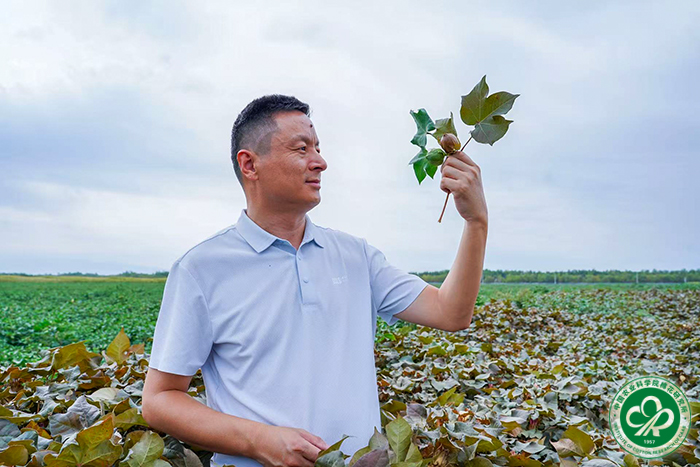
Snow‑capped mountains witness original aspirations; river valleys bear witness to missions. In July 2025, Associate Researcher Li Junwen of ICR‑CAAS, entrusted by the organization, traveled to the snow‑covered Xizang plateau, taking the temporary post of Deputy Director of the Crop Planting Division under the Xizang Autonomous Region Department of Agriculture and Rural Affairs. Moving from plains to Xizang, where the average altitude exceeds 4 000 meters, he endured not only physical challenges but also tempering of willpower and convictions.
Since arriving in Xizang, he has overcome hardships including oxygen shortage and aridity. He conducted field surveys on high‑land barley, quinoa and other industries in Lhasa, Shigatse and other localities. He headed field missions for special investigations on winter agricultural production covering four prefecture‑level cities and twelve counties and districts. He has evolved from a research scientist into a grassroots official, gaining a genuine understanding that research papers ought to be written across the land, and outcomes ought to deliver tangible benefits to farmers and herdsmen.
The “ICR‑CAAS Spirit” — “hard‑working, dedicated, practical and innovative” — has constantly inspired him. From laboratories to the fertile plateau farmland, he brought the perseverance and tenacity of cotton researchers to high‑land barley fields on Xizang’s snowy plateau. Li Junwen reflected: “My one‑year assignment aiding Xizang has reshaped my understanding of striving. I have learned that the land beneath our feet serves as the finest classroom for scientific research. One mission to aid Xizang fosters lifelong affection for this snowy land. I shall continue to root myself in the plateau soil and contribute to the high‑quality development of Xizang’s agriculture and animal husbandry.”
Rooted in border regions, remaining faithful to original aspirations to secure national cotton‑industry safety
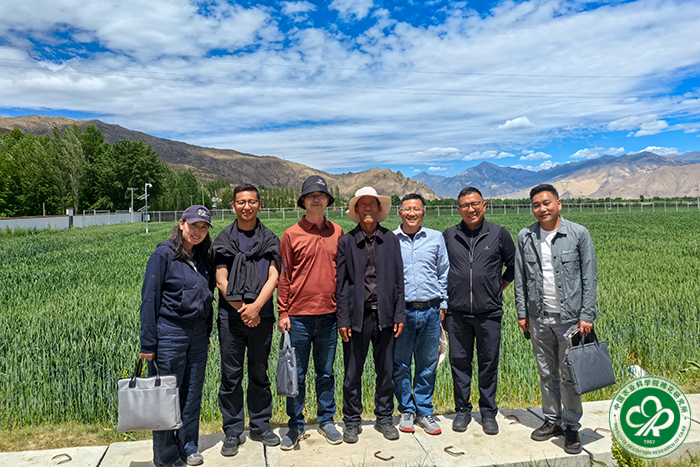
Huo Peng once held the temporary post of Deputy Director of the Seed Industry Administration Division of the Xinjiang Uygur Autonomous Region Department of Agriculture and Rural Affairs, in charge of germplasm‑resource conservation, breeding innovation, base construction and project management. Over his three‑year assignment aiding Xinjiang, he deeply realized that his post constituted a front‑line position defending China’s national cotton‑security strategy.
“Seed‑industry work features long cycles and slow returns. Through studies on establishing and practicing a correct view of political achievements, I have come to understand that genuine accomplishments lie not in the quantity of short‑term projects or superficial highlights, but in unglamorous long‑term work such as germplasm‑resource conservation and breeding‑innovation breakthroughs,” Huo Peng stated.
Drawing on ICR‑CAAS’s research platform, he organized precise identification of Xinjiang cotton germplasm resources, coordinated whole‑genome sequencing for cotton and construction of intelligent plant‑phenotyping platforms, partnered with competitive seed‑industry enterprises to tackle new‑cotton‑variety development, and advanced the building of high‑quality cotton seed‑propagation bases.
He noted: “Going forward, I will always keep national strategic priorities firmly in mind. Upholding the philosophy of ‘not seeking personal credit for achievements, yet being duty‑bound to deliver them’, I will immerse myself in grassroots work, deepen cooperation between research institutes and local authorities, translate the correct view of political achievements into concrete actions. Through tangible progress in cotton‑seed‑industry revitalization, I will fulfill the strategic mission of safeguarding national cotton‑industry security.”