- Location : Home» Newsroom
Elite ICR‑CAAS Cotton Varieties Deliver Stable and High Yields in Xinjiang amid Extreme Weather
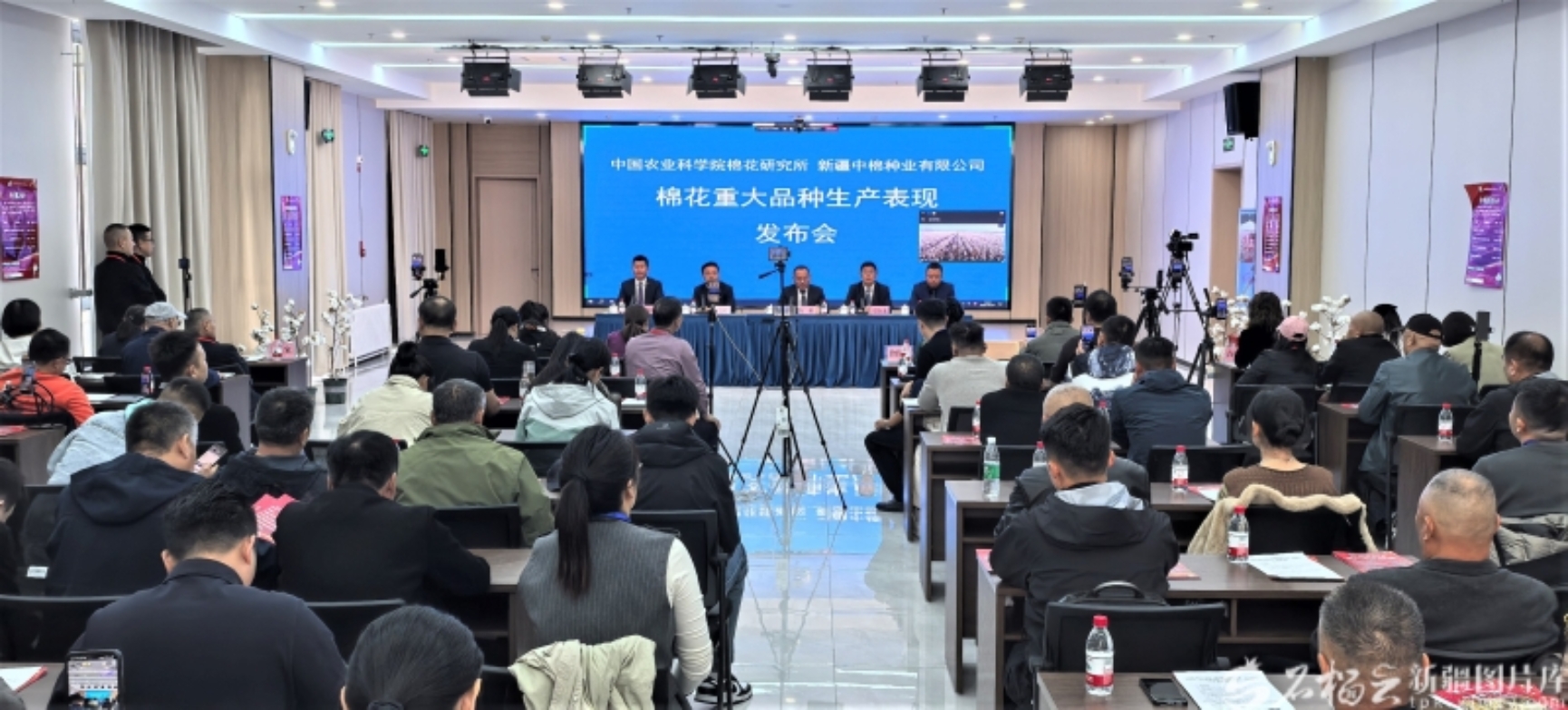
On October 24, the Institute of Cotton Research of CAAS (ICR‑CAAS) held a briefing on field performance of its key cotton varieties. Affected by El Niño, Xinjiang cotton production faced multiple extreme climate shocks this year. Even under such harsh conditions, ICR‑CAAS-bred varieties proved their resilience and achieved stable, high yields across northern and southern Xinjiang cotton zones.
Fang Song, Deputy Director of ICR‑CAAS, explained that Xinjiang cotton areas suffered successive hazards: persistent low temperatures at the seedling stage delaying emergence, prolonged heat stress during flowering and boll-setting, excessive rainfall in the late growth period, plus outbreaks of whitefly in some fields. Leveraging an integrated “variety + technology + service” model, the institute deployed elite varieties, matched agronomic packages and on-site technical support to mitigate weather losses. Experts worked directly in fields with tailored plans for each variety, rolling out green cultivation, saline‑alkali soil improvement and heat stress boll-preservation techniques covering the whole growing season to tackle weak seedlings from cold stress, boll shedding under high temperature and planting limits on saline‑alkali land.
Varieties including CCRI 113, CCRI 9001 and CCRI 96B exhibited outstanding stress tolerance. Field tests showed over 80% demonstration plots in northern Xinjiang produced 450–550 kg seed cotton per mu, with some exceeding 600 kg. Most southern Xinjiang demonstration fields yielded more than 500 kg per mu. Standout results included 617.7 kg/mu for the 100‑mu CCRI 9001 plot in Yishikuli Township of Shache County, 601.4 kg/mu for the 1,000‑mu CCRI 113 plot in Changji National Agricultural High‑Tech Zone, and 587.7 kg/mu for the 1,000‑mu CCRI 96B plot in Makit County.
Fang Song noted elite seeds are key to raising cotton production efficiency. Based on independent breeding, ICR‑CAAS explores superior genes and pyramids desirable traits: drought resistance, salinity tolerance, pest and disease resistance, machine-harvest suitability, high yield and good fiber quality. Gene-editing technology is adopted to develop widely adaptable varieties together with green and efficient cropping systems, underpinning cost reduction and low‑carbon transformation for Xinjiang’s cotton industry.