- Location : Home» Newsroom
CRI Delegation Attends the 2nd China–Central Asia International Symposium on Agricultural Science and Technology Innovation and Cooperation
The 2nd China–Central Asia International Symposium on Agricultural Science and Technology Innovation and Cooperation was recently held in Tashkent, Uzbekistan. The symposium was hosted by Tashkent State Agrarian University, the Agricultural Knowledge and Innovation Center of the Ministry of Agriculture of Uzbekistan, and the Chinese Academy of Agricultural Sciences, and organized by the CAAS Western Agricultural Research Center, the Cotton Research Institute of CAAS and other institutions. A CRI delegation comprising Director and Party Committee Secretary Gao Lei and researchers Yang Zuoren, Cui Jinjie, Yuan Youlu, Yin Zujun, Wang Zhanbiao, Kuang Meng, Feng Lu, Wei Feng and Wu Yuzhen attended by invitation and visited the Uzbek Cotton Breeding, Seed Production and Agricultural Technology Research Institute.
At the symposium, Gao Lei delivered a keynote report entitled "Current Status and Research Progress of the Global Cotton Industry," analyzing the overall situation of global cotton industry development, introducing the diversified economic value of the cotton industry, and sharing CRI's major research achievements and international cooperation practices in germplasm resource innovation, cotton breeding and cultivation technology development, providing reference for deepening China–Central Asia collaborative innovation in cotton science and technology.
Cui Jinjie, Yang Zuoren, Yuan Youlu, Yin Zujun and Wei Feng gave academic presentations respectively on "Safety Management and Risk Assessment of Genetically Modified Organisms in China," "Whole-Growth-Period Field Phenotyping Monitoring for Cotton Genetic Improvement," "Breeding of New Cotton Varieties Balancing Fiber Quality and Yield," "Mechanisms of Cotton Salt Tolerance Regulation" and "Research and Application of the Microbiome in Cotton Verticillium Wilt Resistance." Kuang Meng and Wu Yuzhen presented posters on "Construction and Application of a DNA Fingerprint Database of Chinese Registered Varieties Based on SSR Markers" and "Cotton Variety Purity Identification Entering a New Era of SSR Molecular Detection."
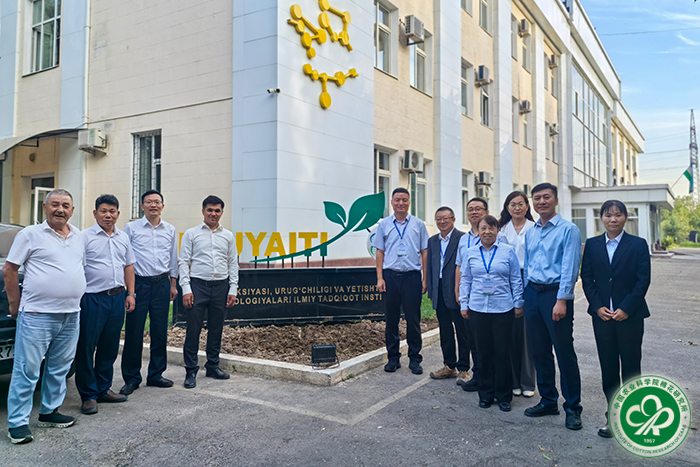
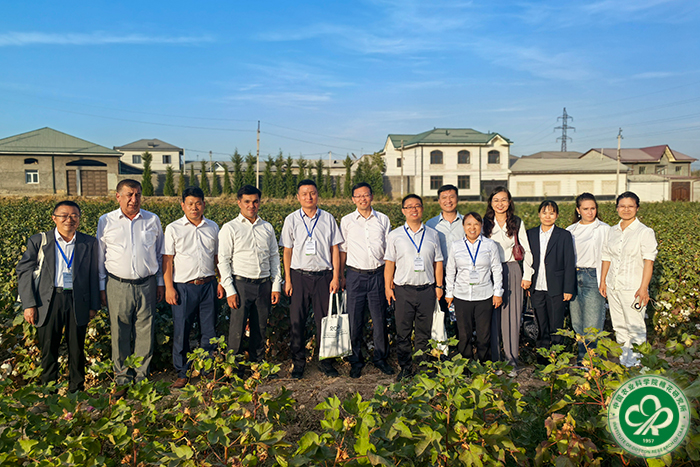
After the symposium, the delegation visited the Uzbek Cotton Breeding, Seed Production and Agricultural Technology Research Institute and toured the China–Uzbekistan Cotton Biotechnology Joint Laboratory and its experimental base. The two sides held in-depth exchanges on joint research and talent training, focusing on germplasm resource exploration and utilization, breeding of heat-tolerant cotton varieties and high-yield, high-efficiency cotton cultivation technologies. They explored joint project applications, personnel exchanges and technology demonstration and extension, and signed a China–Uzbekistan cooperation agreement on cotton seed quality testing and standardization. Under the agreement, the two sides will jointly build a cotton seed quality testing and standardization technology system and cooperate on molecular detection of cotton seed, standard development and database platform construction.