- Location : Home» Newsroom
Integration of NIRS and GWAS identifies GhMYB86 as a potential regulator of cottonseed protein content with pleiotropic effects on fiber strength in upland cotton.
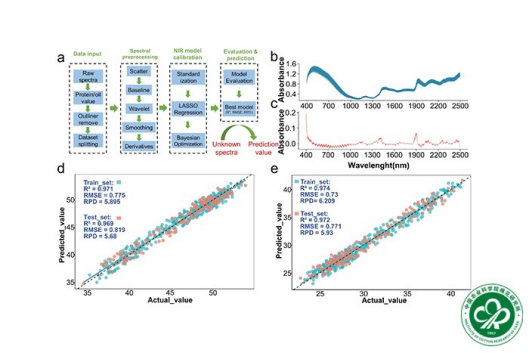
Key messages High-accuracy NIRS models and GWAS identified a novel QTL qPO-A07-1. GhMYB86 was validated to enhance seed protein content and fiber strength, and a functional KASP marker was developed. Cottonseed is rich in protein and oil; improving its nutritional quality is vital for global food security. In this study, near-infrared spectroscopy (NIRS) models were developed for predicting cottonseed protein and oil content using least absolute shrinkage and selection operator (LASSO) regression, achieving validation R 2 of 0.969 (P -4 ). A novel stable quantitative trait locus (QTL), qPO-A07-1, was detected, within which GhMYB86 was prioritized as a candidate gene. This gene exhibited higher expression in high-protein-content varieties during ovule development. Heterologous overexpression in Arabidopsis thaliana increased seed protein content by 2.61-3.34%, whereas expression in Saccharomyces cerevisiae increased protein content by 25.81% and reduced triglyceride content by 30.72% in comparison with the control. These results demonstrate that GhMYB86 positively regulates protein content while negatively affecting oil content. A kompetitive allele-specific PCR (KASP) marker targeting a promoter A/T polymorphism revealed that the AA allele was associated with higher-protein content, lower-oil content, and increased fiber strength across both mapping and validation populations. Furthermore, the protein content- and fiber strength-favorable allele has undergone positive selection during breeding. This study provides phenotyping tools, reliable genetic resources and a molecular marker for cottonseed nutritional quality breeding, laying a foundation for the improvement in cottonseed protein content and fiber strength.