- Location : Home» Newsroom
Sublethal emamectin benzoate stress suppresses multi-generational reproduction and remodels gut microbiota of Thrips tabaci
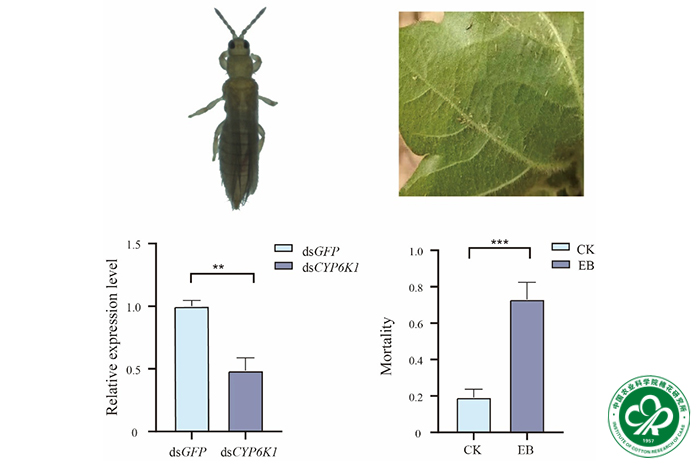
Thrips tabaci (Thysanoptera: Thripidae) is a globally important agricultural pest, and its management heavily depends on chemical insecticides. Emamectin benzoate (EB), a biogenic pesticide widely used for thrips control, exhibits high acute toxicity to T. tabaci. In this study, we systematically evaluated the toxicity and sublethal effects of EB on T. tabaci and dissected the underlying regulatory mechanism. Exposure to EB at the LC₂₀ level significantly reduced adult longevity and fecundity in the parental F₀ generation, and this suppressive effect persisted into the F₁ progeny. Transcriptomic and functional validation confirmed that the cytochrome P450 gene CYP6K1 plays a vital role in the insect’s response to EB stress; RNA interference-mediated silencing of CYP6K1 markedly increased thrips susceptibility to EB. Moreover, sublethal EB exposure reshaped the composition of gut microbiota: the relative abundance of Acinetobacter declined while Pantoea proliferated. Our results demonstrate that T. tabaci relies on a coordinated defense system consisting of host detoxification genes and gut symbionts to cope with insecticide pressure, and disruption of this system weakens pesticide tolerance. This work provides multi-layered evidence for understanding transgenerational sublethal effects of EB on T. tabaci and offers new insights to develop integrated pest management strategies targeting both insect detoxification pathways and gut microbial communities.